

Ceramic decals (also called ceramic transfers) are a popular way to decorate pottery and come in three main types:
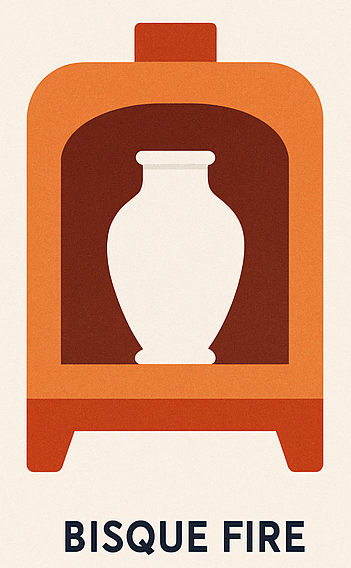
Underglaze decals – applied to biscuit (bisque) ware, then glazed over.
Onglaze decals – applied on top of an already glazed item.
Inglaze decals – applied on top of the glaze, but during firing they sink under the glaze surface.
These decals are normally silkscreen printed or sometimes offset litho printed. The design is printed using ceramic pigments onto paper coated with a gum layer. Each type of decal has its own firing temperature, method of application, and durability.
- Underglaze Decals
Where applied: Biscuit ware (unglazed fired clay).
Preparation: To ensure good adhesion, first seal the biscuit surface with a size (a thin sealing layer).
Application:
- Soak the decal in water for a few minutes until it slides from the backing paper.
- Carefully slide the decal onto your ceramic piece.
- Use a soft silicone kidney squeegee to remove all water and air bubbles.
- Allow the piece to dry fully before firing.
Covercoat: All decals have a covercoat that needs to burn off during firing. This is toxic, so always ventilate your kiln and workspace.
Firing: Around 700 °C is used to burn off the cover coat and prepare the surface for glazing. This is why it is called “underglaze” – the colours will sit under the final glaze layer.
Painting vs. Printed Underglaze
The pigments used for decals and for hand-painting underglaze are the same. The difference lies in the medium:
Decals use a screen-printing medium.
Painting uses a brush medium.
Painters sometimes do a low firing (around 600 °C), often called a hardening-on firing, to fix colours before glazing. This prevents the glaze water from disturbing the colours and helps reduce glaze crawling problems.
- Onglaze Decals
Where applied: On top of a previously glazed and fired ceramic item.
Application: Same process – soak in water, slide onto glaze, remove water/air bubbles, and let dry.
Firing: Usually between 780 °C and 800 °C. Always check your supplier’s recommended temperature.
Important:
Covercoat burn-off produces toxic fumes – always vent your kiln and workspace.
Poor ventilation can alter colours (reds may turn brown, pinks may dull, metallics may tarnish).
- Inglaze Decals
Where applied: On top of a glazed surface.
During firing: The decoration sinks into the glaze surface.
Application: Same careful method – soak, slide, squeegee, remove air bubbles, and dry.
Firing: Higher temperature firing, according to the manufacturer’s design range.
Quick Reference
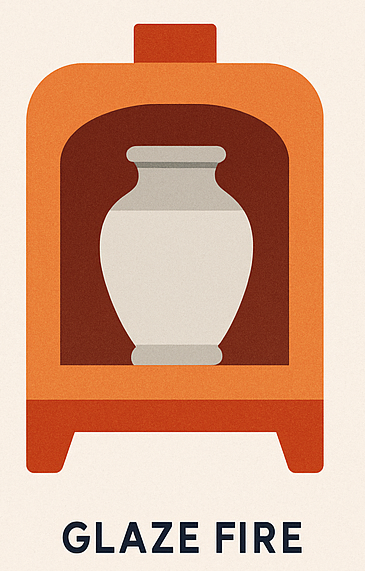
Underglaze decals: Applied to biscuit, then fired at ~700 °C, (hardening-on firing,)
to fix colours before glazing. Than glazed over and fire to glaze Temperature
Onglaze decals: Applied on top of glaze, fired 780–800 °C.
Inglaze decals: Applied on top of glaze, then sink into glaze during high-temperature firing.
Colour Notes
Onglaze colours Manufacturers offer a variety of colours that can be blended; however, caution is necessary, as certain palettes may contain.:
Cadmium colours
Gold-based pinks
Non-gold pinks
⚠️ Not all colours are inter-mixable.
Mediums Used
Painting mediums: Used when applying pigments by hand with brushes.
Printing mediums: Used in the manufacture of screen-printed decal transfers.
Precious Metals & Lusters
Special onglaze products such as gold, platinum, and lusters can be applied in the same way as onglaze . Precious metals and lustres are usually ready mixed for painting or in a medium for printing , but they require careful firing and good ventilation.
✅ Tip: Always work in a well-ventilated space when firing decals, as the covercoat burn-off is toxic. Vent your kiln properly to ensure bright, clean colours
🎨 Ceramic Decal Transfers – Quick Checklist
🔹 General Safety
- Always vent your kiln and workspace – covercoat burn-off is toxic.
- Do not stay in the kiln room during decal firing.
- Always check your supplier’s firing temperature guide.
🔹 Underglaze Decals (apply to biscuit ware)
- Seal biscuit surface with a thin size coat.
- Soak decal in water until it slides from backing paper.
- Slide decal carefully onto ceramic piece.
- Use a soft kidney squeegee to remove all water and air bubbles.
- Allow piece to dry fully before firing.
- Fire to around 600 °C to burn off cover coat.
- Apply glaze and fire again to final temperature.
- Optional: “Hardening-on” firing at ~700 °C fixes colours before glazing.
🔹 Onglaze Decals (apply on top of glaze)
- Soak decal in water, then slide onto glazed piece.
- Remove all water and bubbles with a squeegee.
- Let dry completely.
- Fire to 780–800 °C (check supplier’s instructions).
- Ventilation is critical – poor venting can cause:
- 🔴 Reds turning brown
- 💗 Pinks dulling
- ✨ Precious metals tarnishing
🔹 Inglaze Decals (applied on glaze, sink under surface)
- Apply decal onto glazed item.
- Squeegee out all water and bubbles.
- Allow to dry.
- Fire to higher temperature (as specified for that transfer type).
- During firing, decoration sinks under glaze surface.
🔹 Colour & Medium Notes
- Onglaze colour palettes may include: cadmium colours, gold-based pinks, and non-gold pinks.
- ⚠️ Not all colours can be mixed – always test first.
- Painting mediums are used for hand painting pigments.
- Printing mediums are used for screen-printed decals.
🔹 Precious Metals & Lusters
- Apply the same way as onglaze decals.
- Fire carefully at the recommended temperature.
- ✨ Always vent kiln to avoid tarnishing and colour change.
✅ Tip: Always test small samples before using decals on important pieces.
Kiln Firing Log book
Plan, log, and visualize your kiln firing cycles
Handout by Michael G Parry-Thomas · PotteryTech.net